
Learning CPR and First Aid Just Got Easier: What’s New in the 2025 HeartSaver Guidelines
Imagine this:
You’re at a Saturday morning basketball game when a parent in the stands suddenly collapses. For a moment, it looks like they may have simply fainted. But then you notice they’re not responding, and their breathing doesn’t look normal. Someone calls for help, another bystander begins chest compressions, and you run for the AED hanging on the gym wall.
Because of the newly updated 2025 AHA HeartSaver Guidelines, the steps you take next are simpler, clearer, and easier to remember. You turn on the AED and follow the more intuitive prompts, and within moments, help is truly on the way.
This is exactly why the American Heart Association updated the HeartSaver guidelines, and why ACLS Academy has already fully transitioned to teaching the official 2025 standards.
Why the 2025 HeartSaver Guidelines Were Updated
The HeartSaver courses, CPR/AED, First Aid, and Bloodborne Pathogens, are designed for everyday people: parents, teachers, coaches, fitness instructors, workplace responders, and community members who want to be ready in an emergency.
While professional-level courses like ACLS and PALS focus on clinical care, HeartSaver focuses on clear, simple steps that anyone can follow. The 2025 update makes these steps even more:
Easy to learn
Easy to remember
Easy to act on during a real emergency
The AHA reviewed the latest science on CPR, AED use, first aid response, and real-world bystander behavior. They found that most people hesitate not because they don’t care, but because they're unsure of what to do. The new 2025 updates reduce that hesitation by simplifying the key actions rescuers need to take.
What’s New in HeartSaver CPR/AED for 2025
The HeartSaver CPR/AED updates focus on helping bystanders respond faster and with more confidence.
1. Clearer Recognition of Cardiac Arrest
The 2025 guidelines highlight the signs that mean it’s time to act:
No response when you speak to or tap the person
Abnormal breathing — especially gasping or agonal breaths
Not breathing at all
These cues are now taught in a straightforward, memorable way.
2. Stronger, Simpler CPR Instructions
The updated recommendations emphasize:
Firm, deep chest compressions
Letting the chest return fully (“full recoil”)
Keeping compressions going with as few pauses as possible
Switching rescuers every 2 minutes if others are available
These steps remain the most important part of saving a life.
3. More Intuitive AED Use
AEDs have always been designed for the public, but the 2025 guidelines make the steps even easier:
Faster prompts
Clearer timing for analyzing rhythm
Simplified pad placement instructions
Strong recommendations for retrieving an AED immediately when one is available
The updates reflect real-world situations where every second counts.
What’s New in HeartSaver First Aid for 2025
The First Aid course also received important updates designed to help bystanders feel more confident in emergencies.
1. Bleeding Control Made Clearer
Updated pressure application techniques
Revised guidance on when tourniquets may be appropriate in civilian settings
2. Burn & Wound Care
Streamlined steps for cooling burns
Modern recommendations for when medical care is needed
3. Choking Response
Updated steps for infants, children, and adults
Clearer instructions that reduce confusion
4. Recognizing Medical Emergencies
The 2025 version provides more intuitive cues for:
Stroke
Heart attack
Allergic reactions
Low blood sugar
Breathing difficulties
These steps are written in plain language so non-medical rescuers can act quickly.
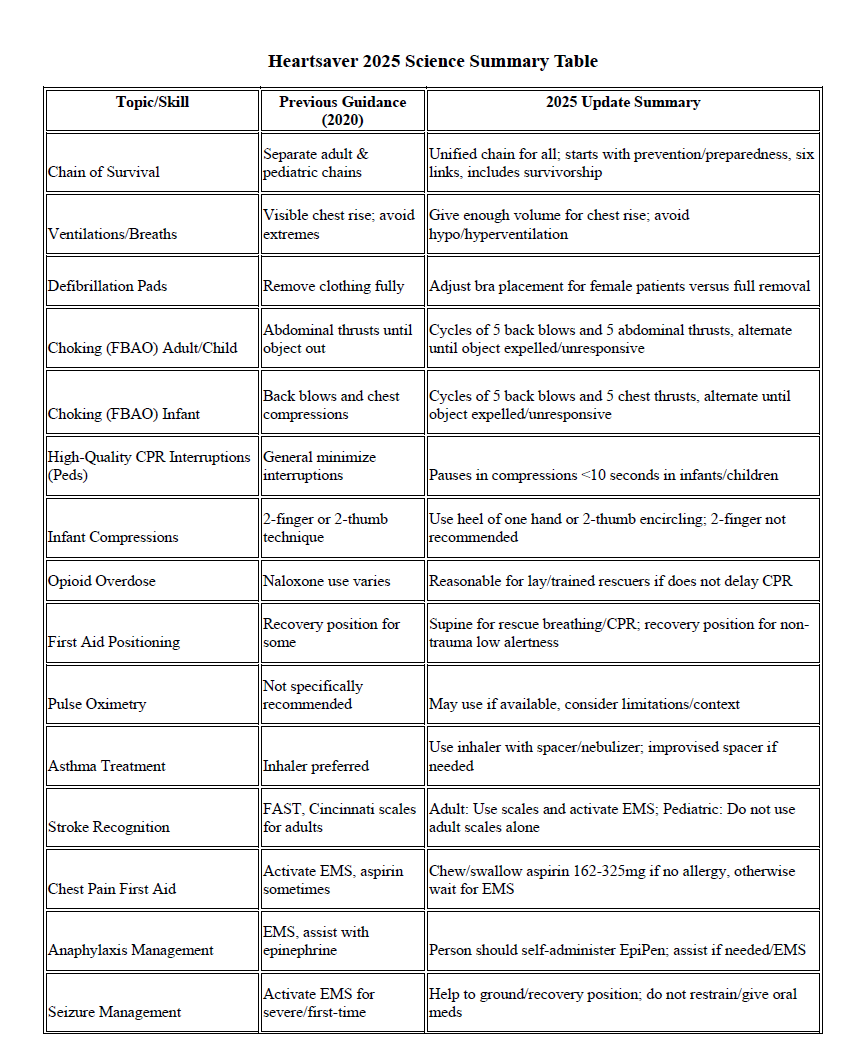
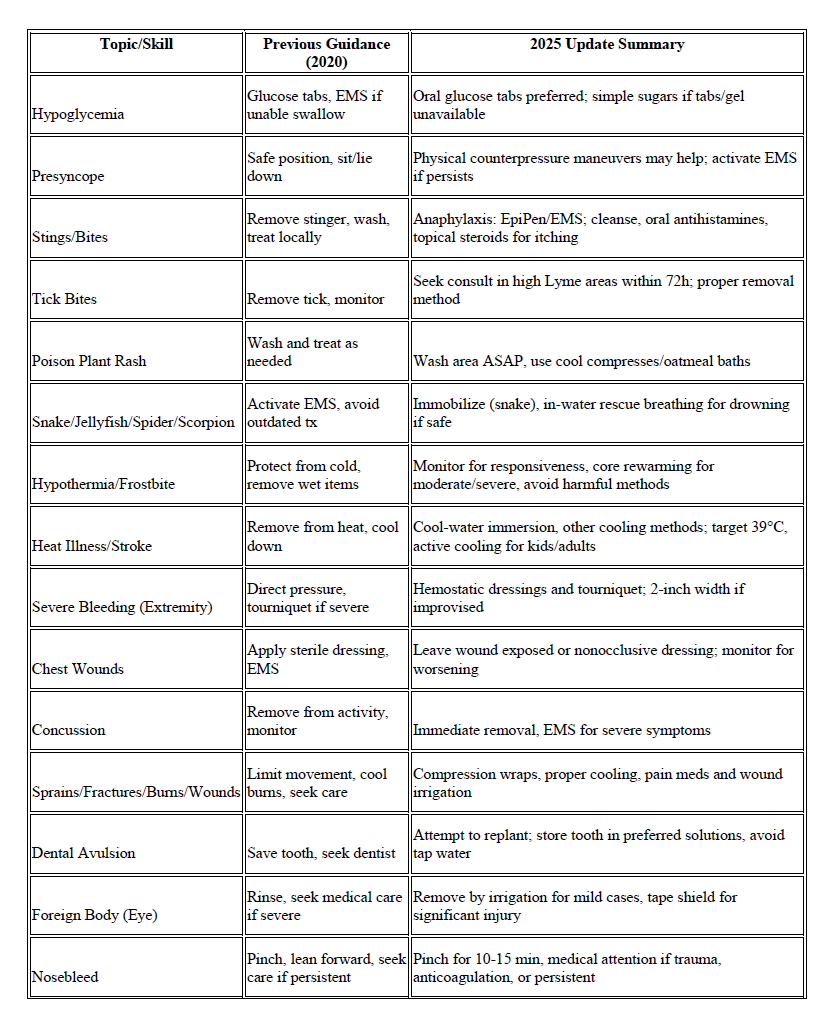
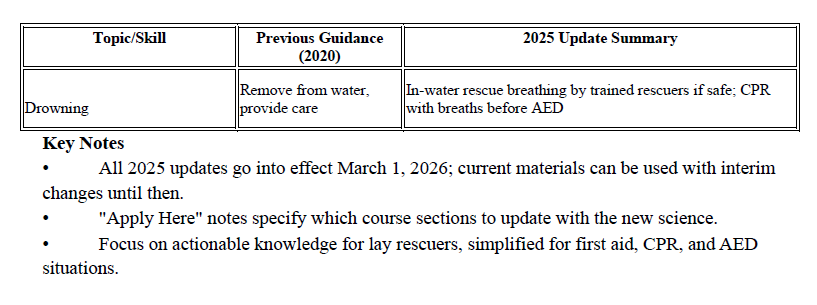
The HeartSaver Science Summary Table & Where to Access Full AHA Resources
The AHA created a HeartSaver section in its Science Summary Table as a quick-reference tool. It includes:
CPR changes
AED updates
First Aid refinements
Evidence supporting each update
Simple, at-a-glance comparisons between 2020 and 2025 guidance
The HeartSaver summary table, along with the full 2025 CPR & ECC Guidelines, algorithms, and evidence updates, is available on the AHA’s official Guidelines for CPR & ECC platform.
ACLS Academy Is Already Teaching the 2025 HeartSaver Guidelines
ACLS Academy didn’t wait for the national transition deadline; every HeartSaver course we teach now follows the final, official 2025 AHA Guidelines, including:
CPR/AED
First Aid
Bloodborne Pathogens
Our instructors are fully certified, and all course materials, manikins, and skills checks have been updated. When you take a HeartSaver course with ACLS Academy, you’ll experience:
Clear, step-by-step CPR and AED practice
Realistic first aid scenarios
Updated choking interventions
User-friendly explanations (no medical jargon)
Supportive instructors who teach with patience and clarity
Our goal is simple: give everyday people the skills and confidence to save a life.
Ready to Learn the Newest CPR & First Aid Guidelines?
The 2025 AHA HeartSaver Guidelines make learning lifesaving skills easier and more accessible than ever, and ACLS Academy is proud to be fully transitioned to these new standards.
Whether you’re a parent, a teacher, a coach, a babysitter, or simply a prepared community member, your training matters.
Train on the current science using the 2025 guidelines. Sign up for a HeartSaver class.
Train with ACLS Academy.