
From the Cafeteria to the Classroom: Belmont Food Services Staff Become Lifesavers
The moments that require lifesaving action rarely come with warning.
They unfold in ordinary places, during routine days, when no one is prepared for what happens next.
For Jackie Morgan, Director of Food Services for the Belmont School District, those moments became more than hypothetical. Through a series of close-to-home experiences, the possibility of an emergency became real—and impossible to ignore. That realization led to a deliberate effort to ensure her team would be equipped with the skills and confidence to respond when it matters most.
The decision wasn’t driven by policy. It was personal.
Jackie shared stories that stayed with her. Her sister, a nurse, had attempted to save the life of a neighbor, performing CPR for an extended period before first responders arrived. Despite her training, the emotional weight of that experience lingered. Around the same time, Jackie’s daughter, a kindergarten teacher, witnessed a colleague begin choking during a school training session, requiring immediate intervention.
Together, those moments underscored a simple truth: emergencies don’t happen in controlled environments. They happen in everyday settings, to everyday people.
And preparation matters.
A District-Wide Effort with Real Purpose
In partnership with ACLS Academy, Belmont took a meaningful step forward.
A total of 24 food services staff members, representing all seven schools in the district, completed Heartsaver CPR training, including AED use and choking response protocols.
While some staff had limited exposure to CPR training in the past - it had often been informal or limited to a small group- this effort ensured consistency across the entire team. This time, every staff member, regardless of role or experience, received the same level of instruction.
This wasn’t about meeting a requirement. It was about creating a safer environment for students, staff, and the broader school community.
Practical Training for Real-Life Situations
What stood out most to Jackie and her team was how practical the training felt.
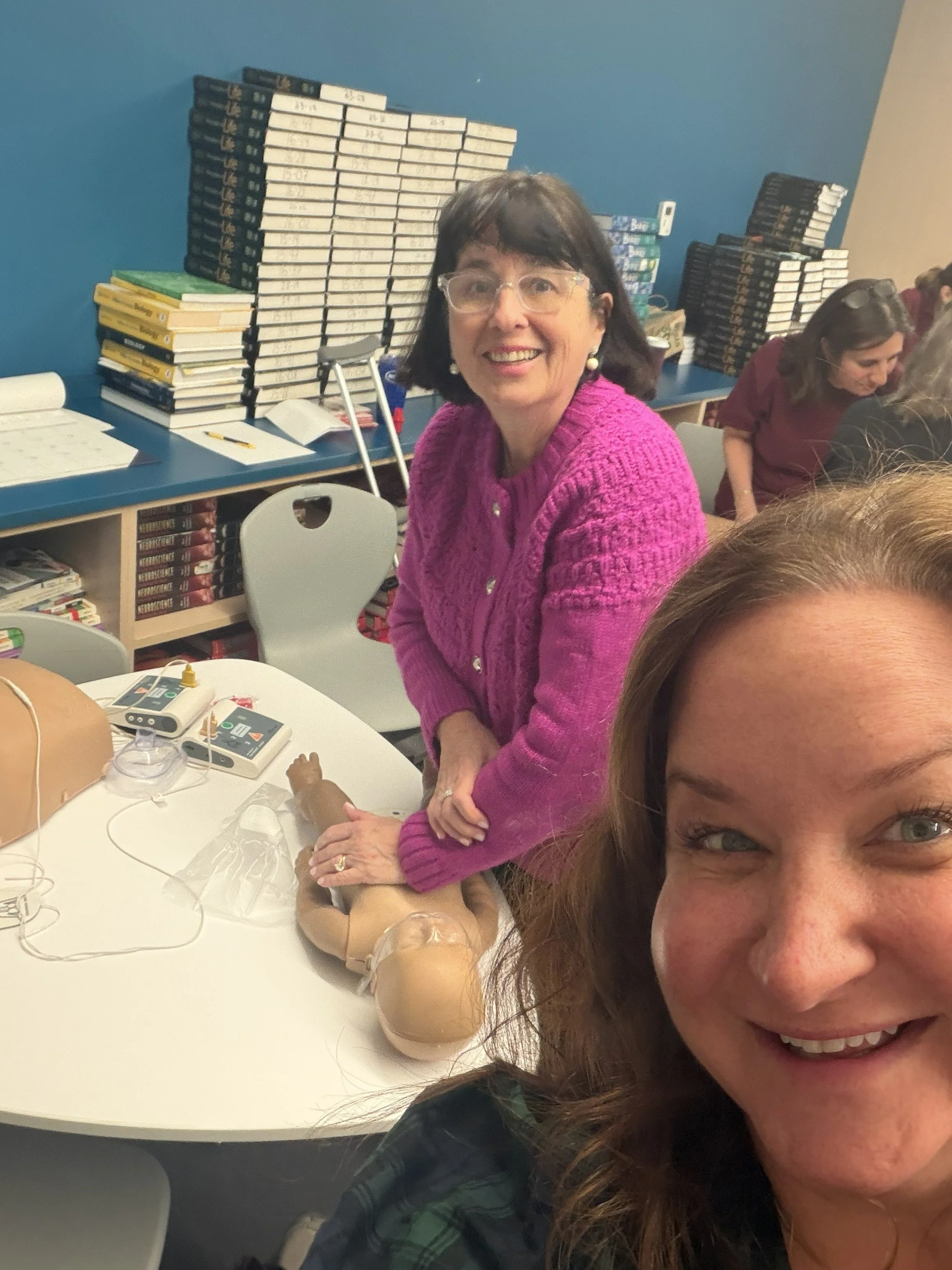
Participants were trained in CPR for adults, children, and infants, along with AED use and choking protocols. But beyond the core skills, the focus was on what actually happens in an emergency—and how to respond with clarity.
Staff learned how to:
Call 911 while remaining with the individual, using speaker mode to stay connected
Quickly locate and access AEDs within their schools
Use protective equipment such as masks
Stay present and composed during a high-stress situation
“These are all the things we were learning,” Jackie shared. “And my staff was just so pleased.”
Following the training, Jackie reinforced preparedness by ensuring each kitchen had access to masks so staff would be ready if needed.
Replacing Assumptions with Confidence
For many participants, the training was eye-opening.
Nearly three-quarters of the group had never been formally trained, and even those with prior experience quickly realized how much the guidelines had evolved.
One moment stood out during choking protocol training. A staff member referenced an older technique involving finger sweeps, something no longer recommended due to safety risks. It was a clear reminder that outdated knowledge can be just as limiting as no training at all.
The hands-on portion of the class made an equally strong impression. Using mannequins, staff practiced chest compressions and received real-time feedback.
“We thought we were pushing hard enough,” Jackie said. “But until you see that green light, you don’t realize how much pressure it really takes.”
Moments like these replaced uncertainty with clarity and hesitation with confidence.
A Training Environment That Reaches Everyone
Another key takeaway was how inclusive and supportive the training experience felt.
Belmont’s food services team includes individuals from a wide range of backgrounds, including many for whom English is a second language. Jackie noted how effectively Shelley and Chad Lynch communicated throughout the session, ensuring that every participant could fully engage.
“They did a fantastic job communicating in a way that everyone could understand.”
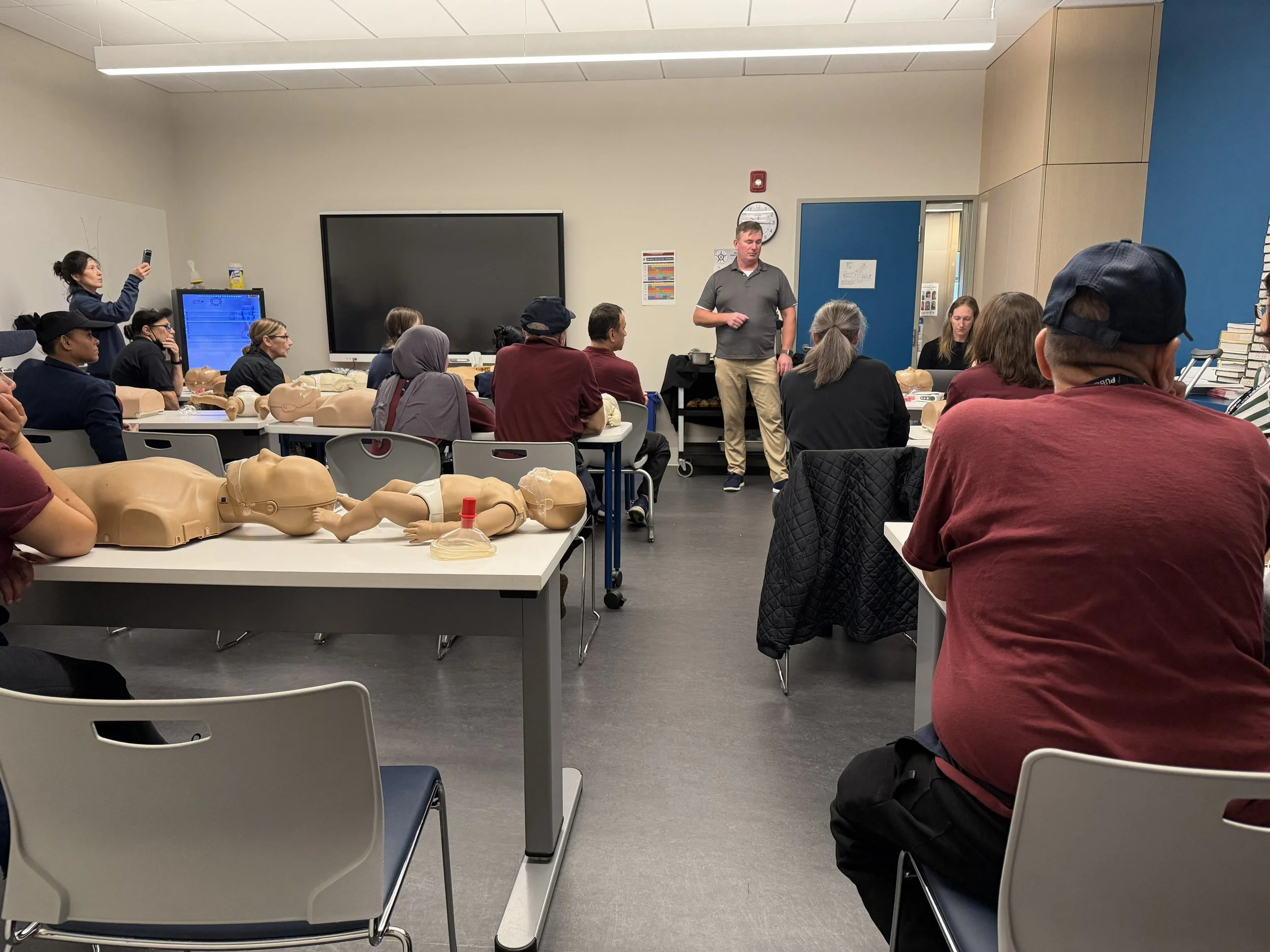
Even small details made a difference. Demonstrations included AEDs with bilingual voice prompts, reinforcing accessibility and ease of use.
But what stood out most to Jackie wasn’t just the structure of the training—it was the overall experience.
“I just think they were spectacular. I’ve been a food service director for 41 years. I’ve done a lot of training for my staff, and I’ve been in three different districts, and this was by far the best training I ever offered my staff.”
That kind of feedback speaks not only to the quality of instruction, but to the way the training resonated with the people in the room.
There were also moments of teamwork that left a lasting impression. During compression practice, one staff member hesitated, unsure if she could continue. Her colleagues encouraged her, counting alongside her until she completed the full sequence.
Later, it came out that her husband has heart issues—adding a deeply personal layer to what initially felt like a training exercise.
The Lessons That Stay With You
Some of the most meaningful takeaways weren’t technical—they were behavioral.
During the session, one participant shared that she had once started choking at a gathering but walked away out of embarrassment instead of staying where others could help.
That sparked an important conversation: stay where you are. Let people help you.
These are the kinds of insights that extend beyond certification. They shape how people respond, not just physically, but emotionally, in moments that matter.
Part of a Much Bigger Movement
Jackie’s connection to ACLS Academy began through her sister, who had worked alongside Shelley Lynch providing pro bono training in Mississippi through Partners in Development.
That same commitment to education continues today, both locally and beyond.
Through initiatives like the American Heart Association’s Nation of Lifesavers, there is a growing emphasis on equipping everyday people with the skills needed to respond in cardiac emergencies.
With this training, Belmont’s food services staff have become part of that effort.
They may not be healthcare providers, but they are now prepared to act.
Prepared for What Comes Next
Schools are dynamic, fast-paced environments. Every day brings new interactions, new challenges, and the unexpected.
Now, across Belmont’s seven schools, 24 food services staff members return to work with more than just certifications.
They carry with them the skills, awareness, and confidence to respond in a moment that could change everything.
And while no one hopes to use those skills, there is reassurance in knowing they are there.
Because when the unexpected happens, preparation makes all the difference.
ACLS Academy is an American Heart Association–aligned Training Center serving the Greater Boston area, with locations in Quincy, Bridgewater, and Newton. Offering courses including BLS, ACLS, PALS, CPR/AED, and First Aid, ACLS Academy provides hands-on, instructor-led and blended learning options for both healthcare professionals and the general public. Known for experienced instructors and a welcoming training environment, ACLS Academy prepares individuals and organizations with the skills and confidence to respond in real-life emergencies. Browse our catalogue of courses.