
The Ripple Effect of CPR Training: How One Instructor in Glendora, Mississippi Saved a Life
It was a quiet evening in the small village of Glendora, Mississippi, when an ordinary gathering at a local establishment suddenly turned into an emergency.
Without warning, a man collapsed.
Panic rippled through the room as people called out for help. Someone ran outside looking for assistance and found James “Pound” Willis, a familiar face in the community and the cook at the local community center.
Just weeks earlier, Pound had completed training to become a certified American Heart Association HeartSaver Instructor.
When he arrived, there was no hesitation.
He quickly assessed the man, directed a bystander to call 911, and immediately began high-quality CPR. With calm focus, he delivered steady chest compressions while those around him watched anxiously.
Minutes passed. Then something remarkable happened.
The man began to show signs of life.
First, a slight movement. Then a breath.
Relief swept through the room as the man regained consciousness. Pound stayed with him, monitoring his breathing and reassuring him until emergency responders arrived nearly forty minutes later.
Because one person in the room had the training and the confidence to act, a life was saved.
And that moment tells the story of why the work of ACLS Academy and Partners in Development in the Mississippi Delta matters so deeply.
A Small Village With Big Challenges
In Glendora, Mississippi, you can walk from one end of town to the other in minutes.
The village, home to fewer than 200 residents, stretches only about half a mile long and a quarter mile wide. It sits in the Mississippi Delta, a region rich in history and culture but often overlooked when it comes to healthcare infrastructure. Ambulance response times can stretch to an hour and a half, sometimes two. The nearest larger medical centers are 45 minutes to an hour away.
In a place like Glendora, time is not just precious. It is critical.
That is why the ongoing collaboration between ACLS Academy and Partners in Development matters so deeply.
Leading this most recent effort was ACLS Academy CMO, Dr. Shelley Lynch, DNP, FNP-BC, APRN, CCRN, AHA Training Center Faculty, and AHA Instructor Jenna Kennally, MPH, BSN, RN, CEN, CPEN, a nurse at Boston Medical Center and South Shore Hospital. With years of frontline clinical experience and a deep commitment to community health, Shelley and Jenna have helped shape ACLS Academy’s mission in the Mississippi Delta from short-term training visits into sustainable, locally led life-saving education.
This is not a one-time mission. It is a long-term commitment to empowering a community with life-saving skills.
Planting the Seeds Before COVID
The partnership began years ago. In 2019, Shelley built a relationship with PID Glendora after multiple visits to Haiti to help improve health qith PID. In early 2020, just before the COVID-19 pandemic changed the world, ACLS Academy traveled to Glendora to train a group of local PID staff in American Heart Association HeartSaver CPR, AED, and First Aid. Those first trainees were embedded in the community through PID’s children’s programming at the local community center.
The idea was simple but powerful. Train the people who are already there.
Then COVID hit. Travel halted. Certifications lapsed. But something important remained. The knowledge stuck.
When ACLS Academy returned in March, 2025 to recertify four individuals, one participant stood out. James “Pound” Willis, the cook at the community center, had not only retained his skills but was actively helping teach the class. He corrected hand placement. He reminded peers about proper glove technique. He remembered details from five years earlier.
It was clear he had more than competence. He had leadership.
Identifying a Future Instructor
Shelley and Jenna recognized something in Pound that went beyond retention. He was engaged, confident, and clearly passionate about the material. They asked him directly if he would consider becoming an instructor.
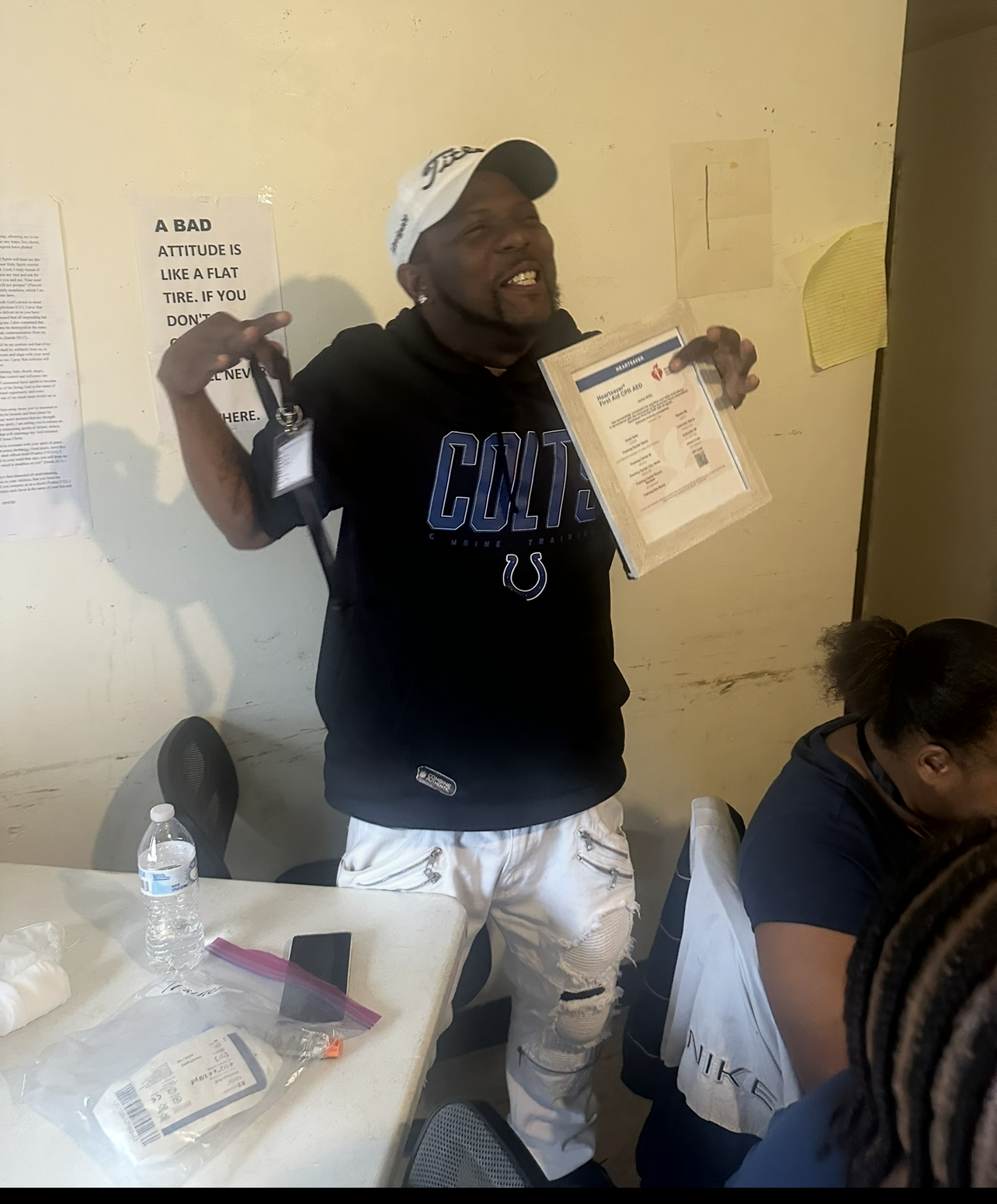
In November 2026, Jenna returned to Glendora to begin instructor training for Pound as an American Heart Association HeartSaver CPR, AED, and First Aid Instructor under the 2025 guidelines.
Becoming an instructor is not simply an extension of being a provider. It requires mastering course structure, learning how to evaluate students, understanding guideline updates, and confidently leading hands-on practice. Instructors must manage logistics, adapt training to local realities, and ensure every student meets competency standards.
Pound embraced the challenge.
Taking the Lead
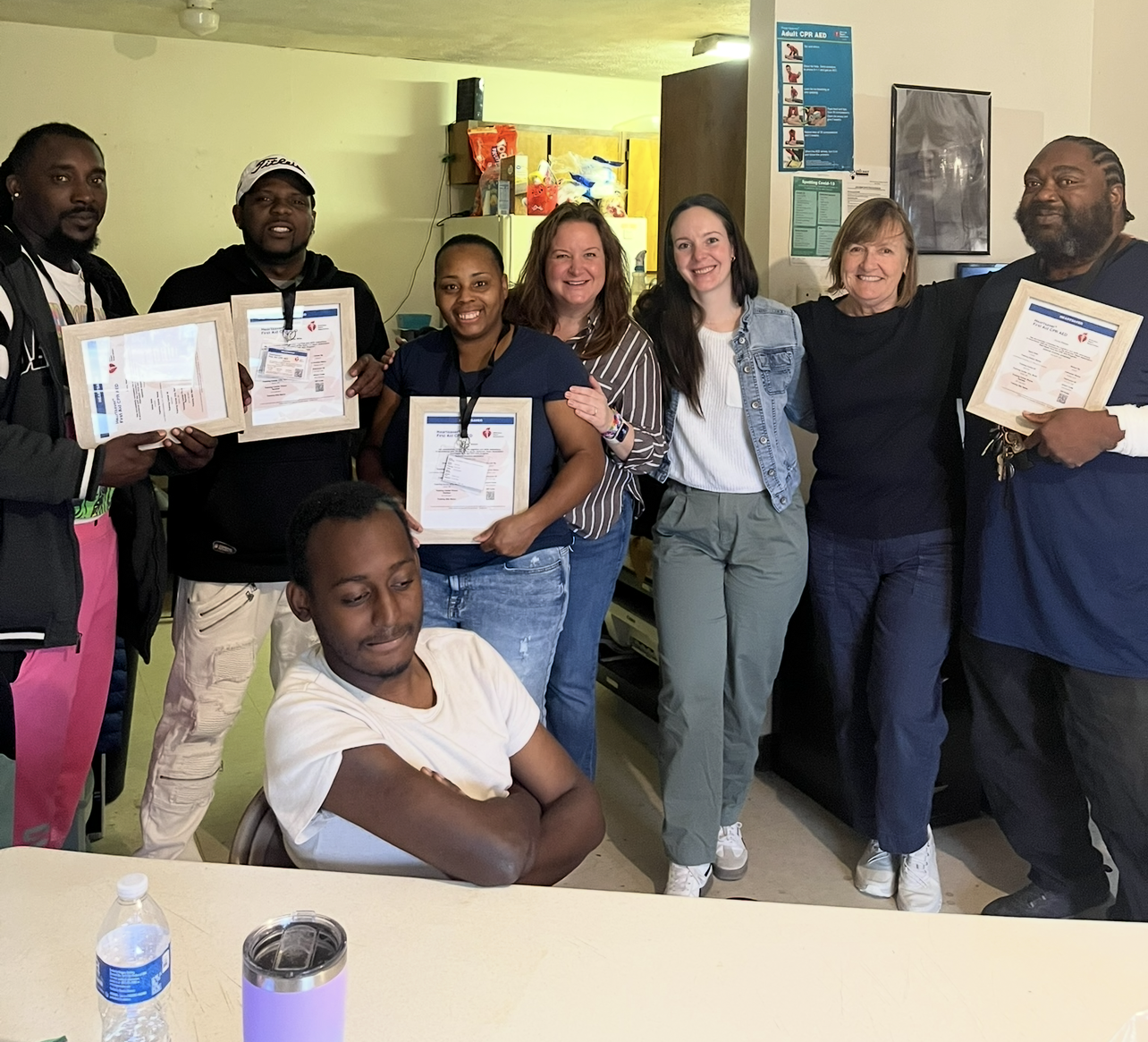
Shelley and Jenna returned to Glendora this January to finish the training. For his instructor training, Pound recruited six members of his community to participate in a two-day HeartSaver course. This time, he stood at the front of the room.
Shelley Lynch and Jenna observed and mentored him, helping him tailor first-aid discussions to the realities of Delta life. Frostbite may be rare. Heat emergencies are not. That nuance matters.
Otherwise, Pound ran the class.
He played the videos. Led discussions. Guided skills practice. Evaluated performance. Issued provider cards.
Afterward, when asked how it felt, he said, “I got chills in my body.”
That moment captures the mission. This was not just certification. It was ownership.
Mentorship, Not Abandonment
What makes this model different is that ACLS Academy did not train Pound and leave.
Jenna is actively mentoring him. For his first several independent classes, she will remain available by phone or Zoom, ensuring he feels supported and confident. Instructors must also be monitored every two years by Training Center Faculty to maintain alignment with guidelines, and that ongoing connection is already in place.
This is not transactional training. It is relational development.
Watching Pound progress from someone who had never performed CPR to someone confidently teaching others has been deeply meaningful for the ACLS Academy team.
From the Kitchen to the Classroom
Pound’s primary role in Glendora is as the cook at the community center. Each day, he prepares meals for approximately 18 children enrolled in PID’s after-school programming. They do homework. They play. They eat dinner.
Pizza is always a favorite. Pepperoni or sausage preferred. His personal favorite to cook? Rotel and wings.
It may seem like a lighter detail, but it matters. He is already a trusted presence in the lives of local families. As a cook, he sees the children daily. As an instructor, he now carries the knowledge to respond if one of those children were to choke or collapse.
That dual role strengthens community trust.
The Ripple Effect
Pound is already planning his next class, hoping to train ten more individuals in the coming weeks. His certification allows him to teach across schools, daycares, churches, and community centers throughout the Delta.
In a region where emergency response can take over an hour, having a trained responder in the room can mean the difference between life and death.
This aligns directly with the mission of the American Heart Association Nation of Lifesavers initiative, which aims to increase CPR awareness and survival nationwide.
Train one instructor. That instructor trains dozens. Those dozens become capable responders. The impact multiplies.
A Growing Commitment
This collaboration is not ending. It is evolving.
What began as a pre-COVID training visit has grown into a mentorship model rooted in sustainability. It reflects trust built over years. It demonstrates what happens when education moves beyond certification and becomes community capacity building.
Glendora may be small. But its story is powerful.
In a village of fewer than 200 residents, the difference between life and death may come down to one trained responder in the room.
Thanks to the partnership between ACLS Academy, Partners in Development, and a determined community leader named James “Pound” Willis, Glendora now has exactly that.
ACLS Academy is an authorized American Heart Association (AHA) Aligned Training Center, and most of our classes include an online training component. We offer high-quality courses taught by practicing medical professionals, including ACLS, BLS, TNCC, ENPC, NRP, PALS, PALS Plus, PEARS, ACLS-EP, ASLS, Bloodborne Pathogen, HeartSaver CPR/AED, First Aid, and Instructor Courses. We have training locations in Quincy, Bridgewater, and Newton.